
Telecommunications
The secure connection to the future in the telco sector
In telecommunications, network security and service availability are critical. VISULOX secures privileged access in real time, protects critical network infrastructure, and ensures compliance with ISO 27001, GDPR, and NIS-2 - agentless and without open VPN tunnels.
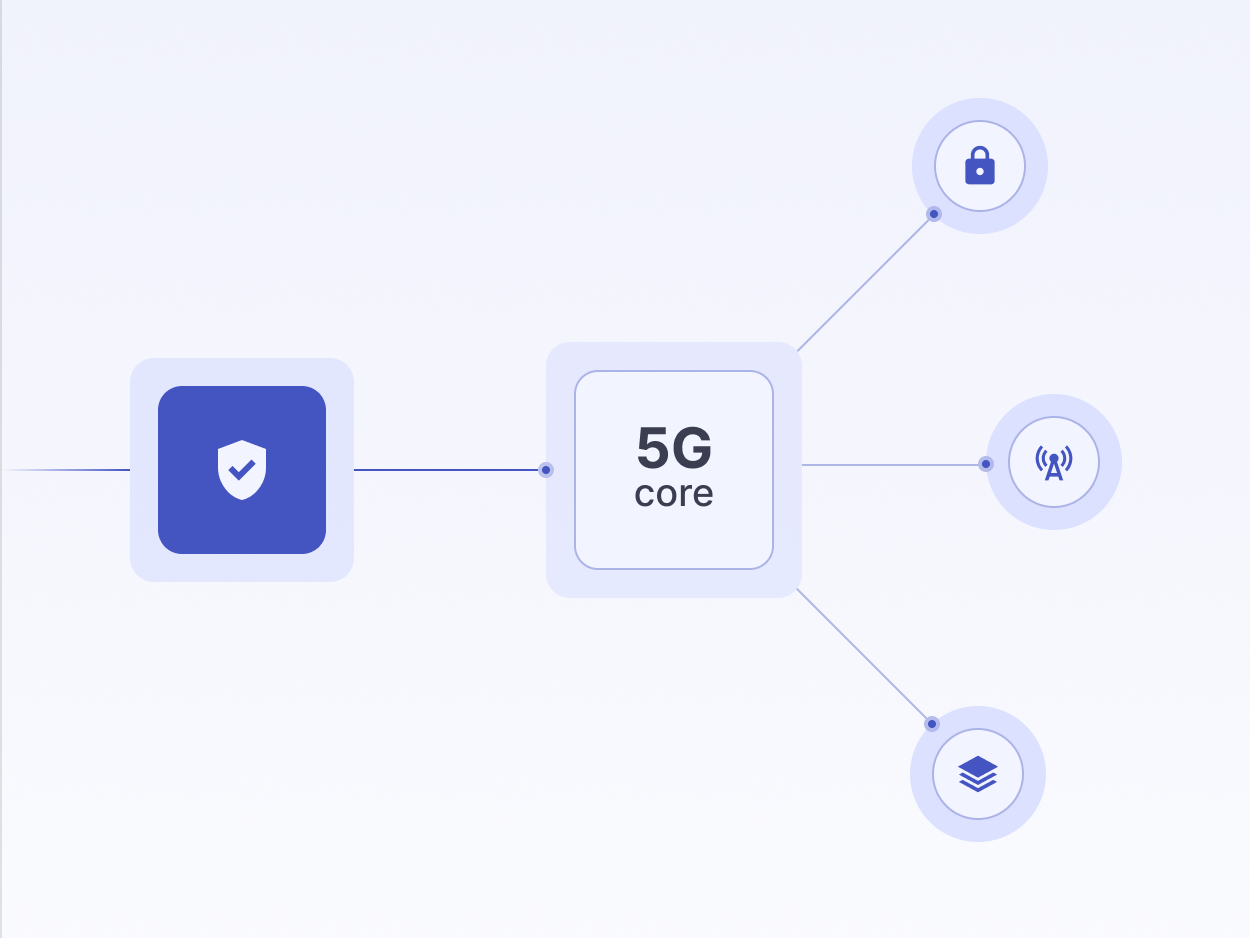
Network operators and telco providers secure privileged access with VISULOX










Facts & Figures
Why settle for yesterday's technology when secure telco is the future?
The critical role of Privileged Access Management in protecting telecommunications providers - by the numbers.
25%
of all cyberattacks worldwide target companies in the telecommunications industry.
50%
successful compromises occur via stolen or insecure credentials.
28 days
an attacker remains undetected within the provider's internal network on average.
Challenges
Security Challenges in the Telco Industry
Telecommunications providers secure complex, critical networks in a rapidly growing digital landscape. Four hurdles make privileged access particularly critical.
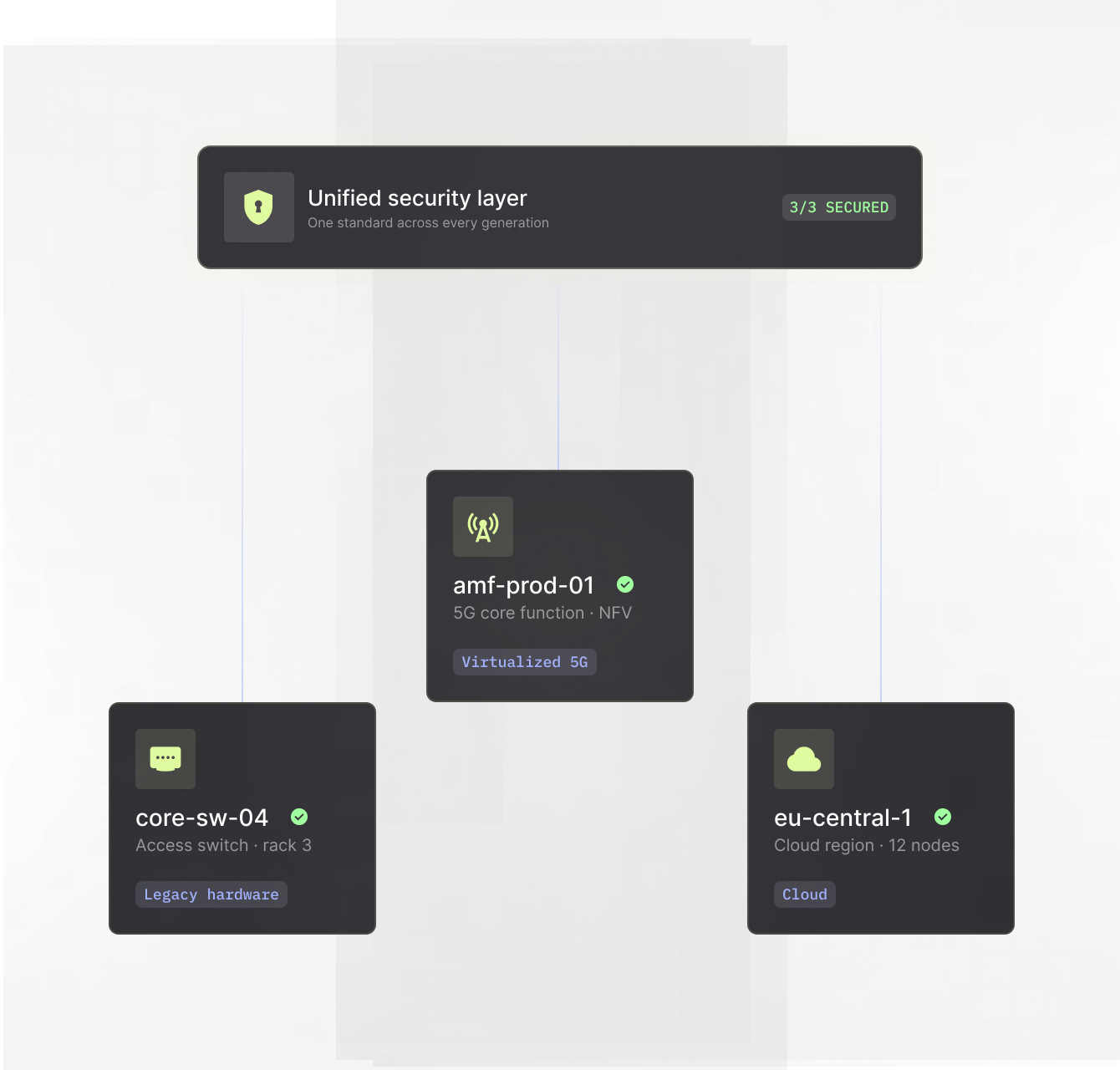
Legacy meets 5G & Cloud
Securing legacy and modern systems uniformly
Legacy systems run in parallel with virtualized 5G core networks and cloud architectures. This integration makes uniform security difficult to achieve.
External Access: Granular, agentless, and without coordination chaos
Internal Access Management: Secure and simplify work from anywhere
Built for Zero Trust: Easily implement all building blocks such as Multi-Factor Authentication and Just-in-Time access
Always traceable: Automated compliance reporting, tamper-proof recordings, and audit trails
Heterogeneous technology generations
Inconsistent security standards
Hard-to-secure interfaces
External & Multi-Vendor
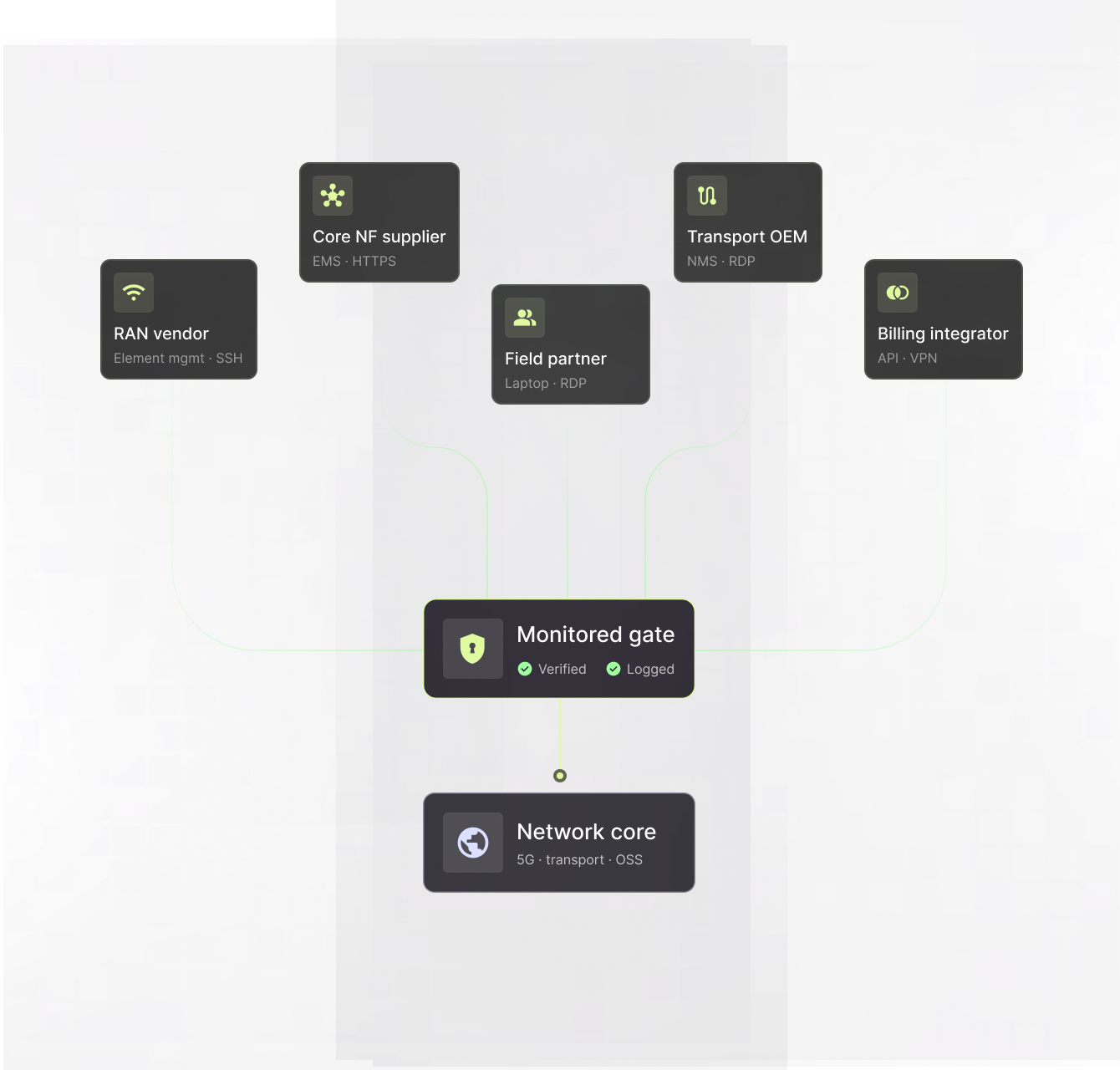
Many vendors, many remote access points
Network operations, maintenance, and expansion are handled by numerous external companies and vendor tools. Every remote access point increases the attack surface.
External Access: Granular, agentless, and without coordination chaos
Internal Access Management: Secure and simplify work from anywhere
Built for Zero Trust: Easily implement all building blocks such as Multi-Factor Authentication and Just-in-Time access
Always traceable: Automated compliance reporting, tamper-proof recordings, and audit trails
External service providers with extensive access
Every vendor system has its own vulnerabilities
Lack of visibility into third-party access
Numerous access points
Numerous maintenance and admin portals
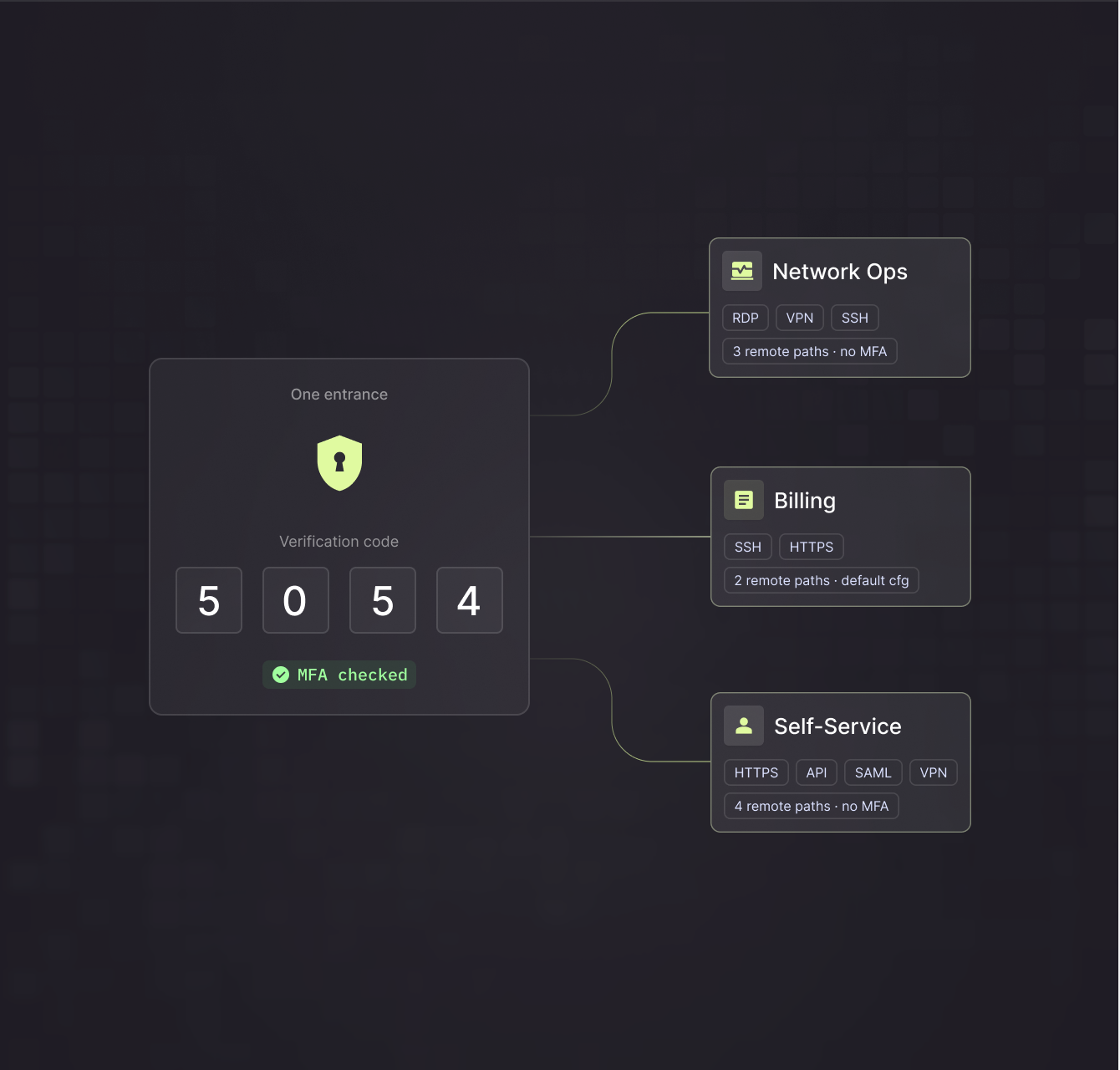
Network operations, billing, and self-service portals each have their own remote access points. Each one represents a potential entry point for threats.
External Access: Granular, agentless, and without coordination chaos
Internal Access Management: Secure and simplify work from anywhere
Built for Zero Trust: Easily implement all building blocks such as Multi-Factor Authentication and Just-in-Time access
Always traceable: Automated compliance reporting, tamper-proof recordings, and audit trails
Multiple remote access points per department
RDP, VPN, SSH without consistent MFA
Default configurations as a vulnerability
Critical Infrastructure & Compliance
Critical infrastructure, strict reporting requirements
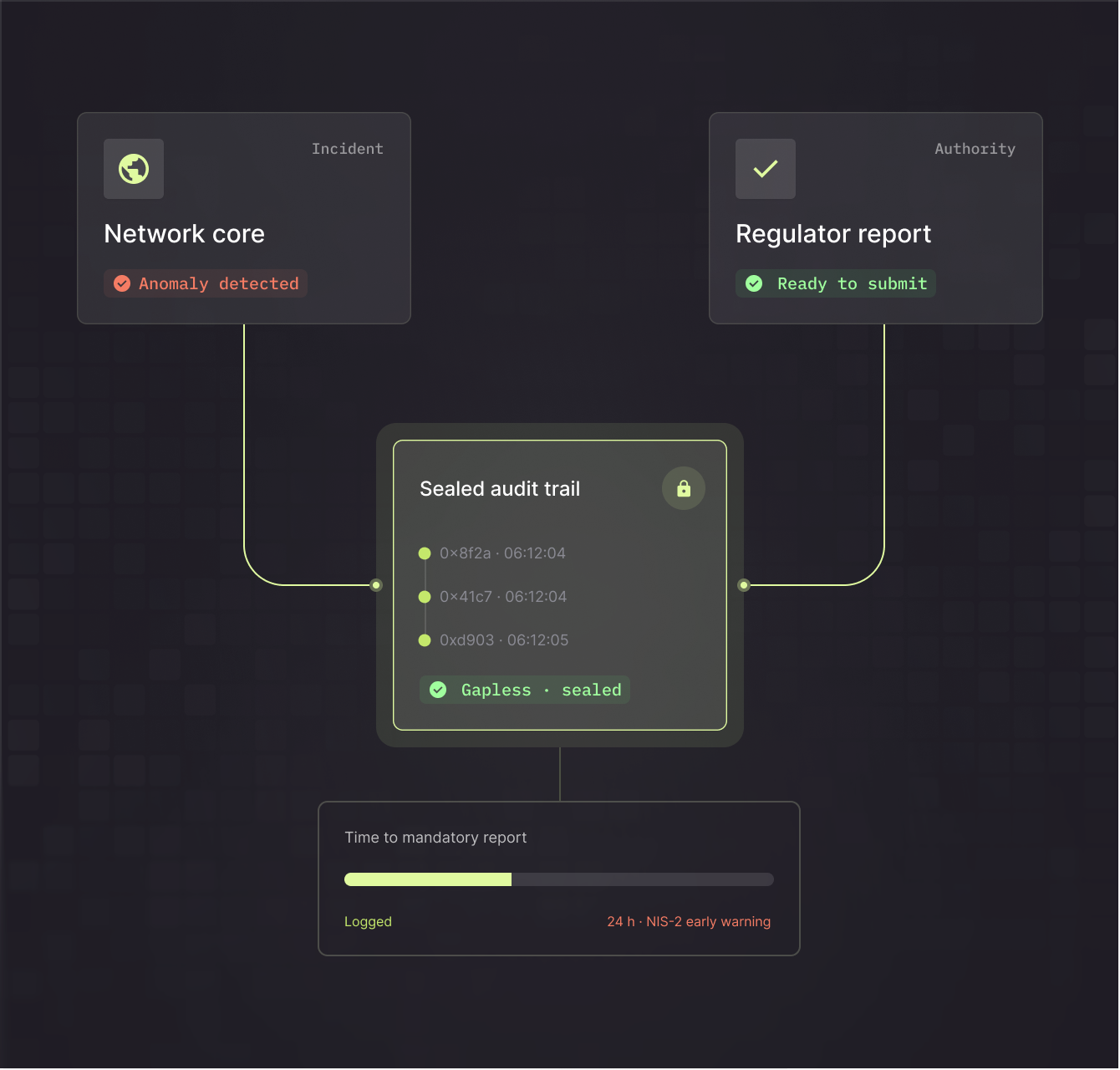
Telecommunications networks are classified as critical infrastructure. Authorities demand the highest levels of security and rapid incident reporting procedures.
External Access: Granular, agentless, and without coordination chaos
Internal Access Management: Secure and simplify work from anywhere
Built for Zero Trust: Easily implement all building blocks such as Multi-Factor Authentication and Just-in-Time access
Always traceable: Automated compliance reporting, tamper-proof recordings, and audit trails
Highest security standards (KRITIS, NIS-2)
Rapid reporting and compliance obligations
Comprehensive logging required
Testimonials
Why over 450 IT teams secure their systems with VISULOX

We use VISULOX as a gateway to secure our customer support environment. Through VISULOX, we establish a secure connection with our customers to assist them in implementing our products. VISULOX provides a secure method with key and video recording that meets the highest security and audit standards. Support is quick and personal.
VISULOX enables the management of information security through the privileged access control of users to various infrastructures with centralized management.
VISULOX works flawlessly, and the IT support is exceptionally reachable in emergencies. Moreover, the team also assists with other concerns, even if they are not directly related to VISULOX.
We can be sure that our R&D data is accessed exclusively by us. VISULOX gives us the assurance that external service providers are never 'unattended' and that no one can access critical information or, in the worst case, even share it.
Secure access to IT infrastructures can be presented very transparently. The system operates stably, even with over 1000 users. Our implementation of ISO 27001 is significantly supported, especially for large infrastructures.

VISULOX monitors service provider activities across servers – privileged multiple accounts are eliminated. Together with amitego, we have developed a transparent, auditable control system that precisely documents who did what and when.
Highly powerful, mature, and secure for privileged remote access by external service providers. First-class support and a forward-thinking development team at amitego. We are in close, ongoing contact with the vendor and can actively contribute to the product's evolution. Customer requests are addressed promptly.

The solution: VISULOX
Centrally secure privileged access with VISULOX
VISULOX consolidates all privileged access to your network infrastructure—granularly controlled, audit-proof, and agentless. This allows you to protect critical networks while ensuring compliance.

Centralized management
All remote access to networks, billing, and maintenance is managed via a central portal—featuring granular permissions, just-in-time access, and MFA.
Real-time overview
Every maintenance and administrative action is monitored in real time and recorded in an audit-proof manner—both internally and externally.
Automated compliance
Comprehensive audit trails support ISO 27001, GDPR, and NIS-2/KRITIS compliance, providing evidence at the push of a button.
Scalable integration
Agentless and multi-tenant, VISULOX integrates seamlessly into legacy as well as 5G/cloud environments. Migration takes less than two days, with no system modifications required.
Contact
Let's secure your network infrastructure
Talk directly to a cybersecurity expert – and see how quickly VISULOX can be up and running in your environment.


Whitepapers
FAQ
Antworten auf die häufigsten Fragen aus der Telekommunikationsbranche.
What is Remote Privileged Access Management (Remote PAM) with VISULOX?
Remote Privileged Access Management (Remote PAM) controls and protects privileged access to IT systems from remote locations — by administrators, external service providers, or partners. VISULOX implements this approach consistently: access is managed centrally, granted on a time-limited basis, uniquely assigned to an individual, and fully documented. Direct connections to the target infrastructure are technically prevented. This ensures control, traceability, and security at all times.
How does VISULOX differ from classic VPN or PAM solutions?
Conventional VPN solutions grant broad network access without fine-grained control. Classic PAM solutions are often complex, costly, and designed primarily for internal users. VISULOX combines the advantages of both approaches: a gateway architecture without direct network access, time-limited just-in-time access, complete session recording, and an agentless architecture. The result: maximum control with minimal administrative effort — purpose-built for secure external access.
How does VISULOX support a Zero Trust strategy?
VISULOX implements Zero Trust consistently: no user has standing access rights — permissions are granted only when needed, based on the least-privilege principle (just-in-time access). Direct network connections are technically prevented through a protocol break. Every session is fully recorded and uniquely assigned to a single individual. This creates a zero-standing-privileges model that also securely integrates external service providers and partners.
Why does VISULOX have a lower total cost of ownership (TCO)?
VISULOX is ready to use within a few days — without complex implementation projects and without changes to endpoints. Its agentless architecture significantly reduces maintenance effort. Licensing by concurrent users avoids hidden costs. Together with integrated German-language support and the avoidance of costs from security incidents, VISULOX demonstrably reduces complexity and operating costs.
Is VISULOX suitable for enterprise environments?
Remote Privileged Access Management (Remote PAM) governs and secures privileged access to IT systems from remote locations — by administrators, external service providers, or partners. VISULOX implements this approach consistently: access is granted centrally, time-limited, uniquely assigned to an individual, and fully documented. Direct connections to the target infrastructure are technically prevented, ensuring control, traceability, and security at all times.